

Jeg limer inn dette nyhetsbrevet fra Dr. Haver! Det er langt, men essensen er som følger (min tolkning):
Undersøkelser viser at kvinner har 50% høyere sannsynlighet for å få benskjørhet, enn menn. De fleste tilfellene oppdages ikke før etter første benbrudd. Så be gjerne om en scan i 50-60-årene!
Årsaken til økt forekomst av benskjørhet blant kvinner, er fall i østrogenet i overgangsalderen. Bentettheten blir gradvis dårligere med tiden, og dette begynner allerede i perimenopausen.
Men hva kan vi gjøre for å motvirke benskjørhet, bortsett fra å få tilført østrogen?
Vi kan leve sunnere:)
Tren styrke, stump røyken og kutt alkohol
Spis mer fiber, omega-3, kalsium og protein!
Er du i perimenopause? Still følgende spørsmål til legen:
- Burde jeg få en DEXA-scan nå, pga min alder og andre risikofaktorer?
- Kan du regne ut min FRAX så jeg forstår min risiko for benbrudd de neste 10-årene?
- Burde jeg vurdere hormonbehandling nå?
- På hvilken T-score vil du vurdere å gi meg medisiner mot benskjørhet?
Osteoporosis and Menopause: The Silent Fracture Most Women Miss Until It’s Too LateWhy bone loss accelerates during perimenopause and menopause, how osteoporosis fractures happen, and the steps that can protect your bones now
Menopause Explained: Evidence-Based Health Guides for Midlife Women Menopause Health Series | Post 3 of 10 Topic: Osteoporosis, Bone Loss, and Fracture Prevention in Midlife Women She did not know anything was wrong. No pain. No warning. She bent over to pick up a bag of groceries, felt a pop in her back, and spent the next six weeks unable to get off the couch. When the imaging came back, her spine showed three compression fractures. She was 59 years old. She had no idea her bones had been quietly eroding for more than a decade. This is not a rare story. This is the most common story. And it is happening because the conversation about menopause and bone health is starting too late, or not happening at all. Osteoporosis is the silent disease of menopause. It does not announce itself. It does not cause pain until after the damage is done. And in a medical system that still treats menopause primarily as a hot flash problem, the bone story gets almost no airtime until a woman is sitting in an emergency room with a fractured hip. That has to change. And it can, because the tools to prevent this exist right now. The Hip Fracture Statistic Every Woman Should Know
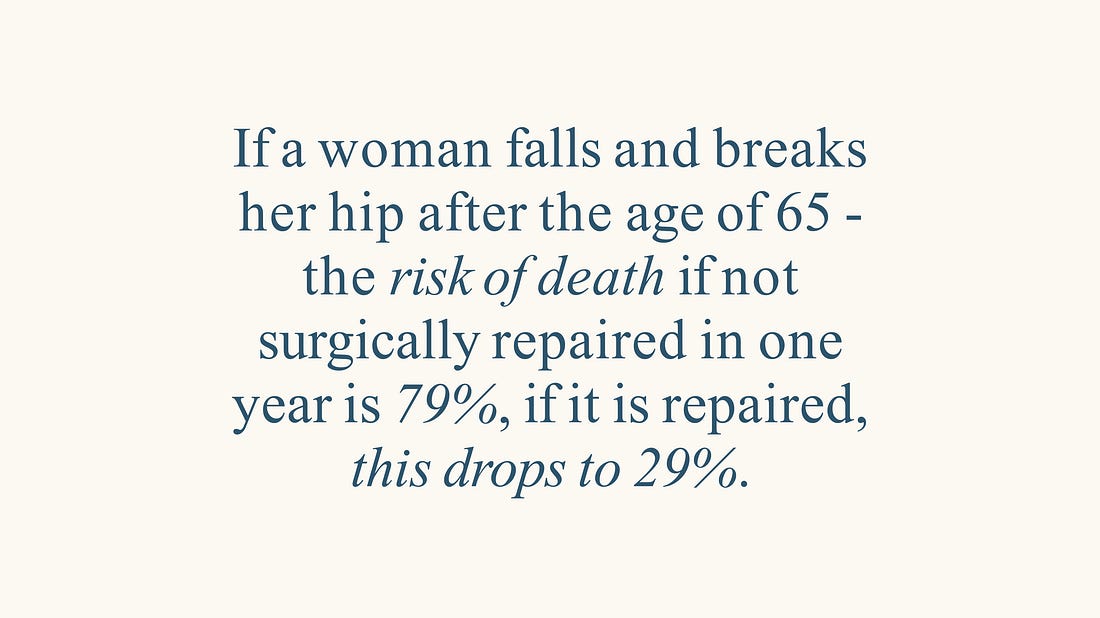
If a woman falls and breaks her hip after the age of 65, the risk of death within one year is 79% if the fracture is not surgically repaired. Even with surgical repair, that number drops to only 29%. Nearly one in three women who fracture a hip will not be alive twelve months later. Read that again. Not just hospitalized. Not just immobilized. Dead. And yet, for most women, osteoporosis screening is not recommended until age 65. The first bone density test happens after the first fracture. We are diagnosing this disease in the wreckage it leaves behind, instead of identifying it twenty years earlier when we could actually stop it. Hip fractures initiate a cascade that is hard to survive. Immobility leads to blood clots, pneumonia, rapid muscle loss, and metabolic decline. The independence a woman has spent decades building can vanish in a single fall down a single set of stairs. This is what bone loss looks like at its end stage. The question is: what does it look like at the beginning? And when does it start? Osteoporosis in Women: What the Research Actually Shows
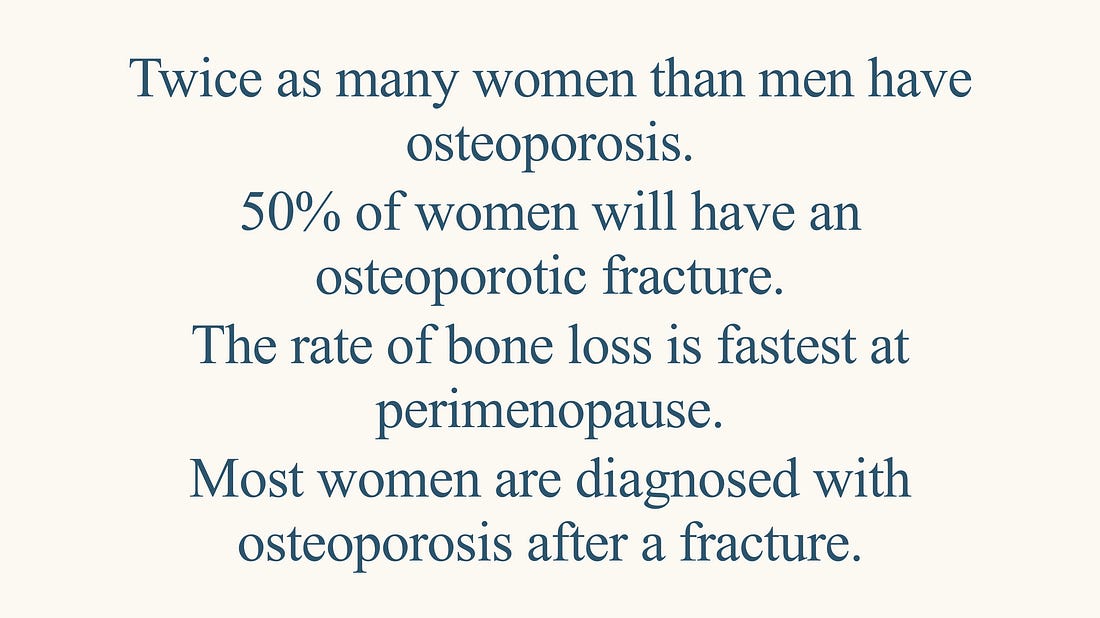
Twice as many women as men have osteoporosis. This is not a small difference. It reflects a fundamental biological reality: estrogen is the primary regulator of bone density in women, and when estrogen falls, bone follows. 50% of women will have an osteoporotic fracture in their lifetime. One in two. That is not a rare complication. That is a near-majority outcome. Spine fractures, wrist fractures, hip fractures. Many of them silent. Many of them preventable. The fastest bone loss of a woman’s life happens during perimenopause, not in her 70s. This is the piece that most people miss. We think of osteoporosis as an old woman’s disease. But the critical window of accelerated bone loss is the 7 to 10 years surrounding the menopausal transition, often beginning in a woman’s mid-40s. By the time she qualifies for her first DEXA scan at 65, that bone has been gone for twenty years. Most women are diagnosed after a fracture. Not before. Not with a screening test that could have prompted earlier intervention. After. This is the medical equivalent of diagnosing a heart attack at autopsy. 50% of women will experience an osteoporotic fracture in their lifetime. Why Estrogen Protects Bone Density During Menopause
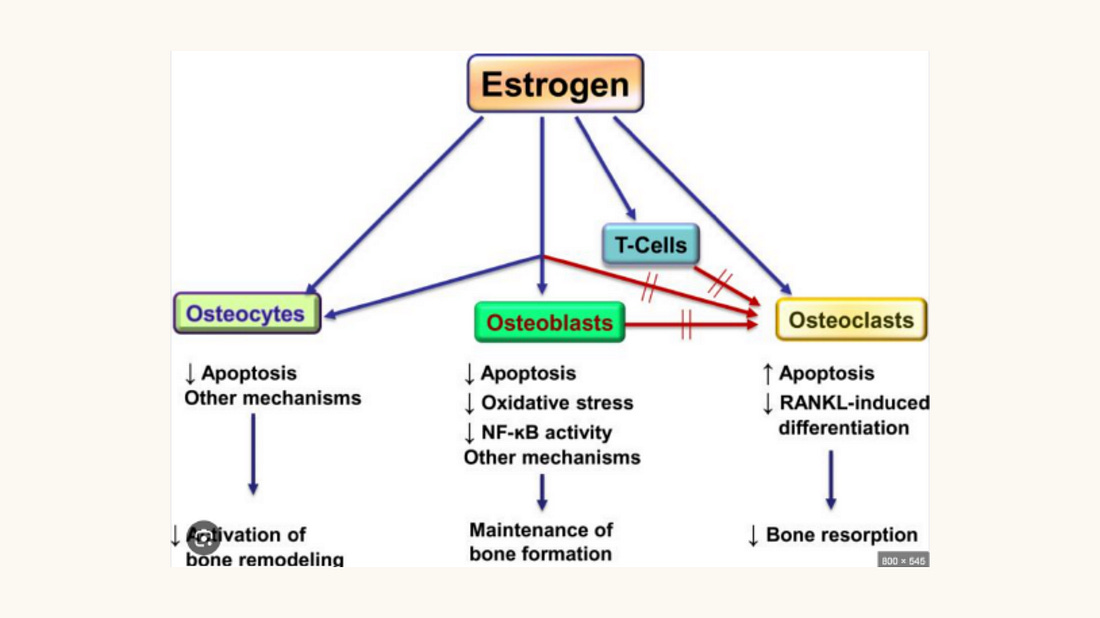
Bone is not static. It is living tissue that is constantly being broken down and rebuilt through a process called remodeling, managed by three types of cells working in careful balance. Osteoclasts break down old bone. Osteoblasts build new bone. Osteocytes are the sensor network embedded within bone tissue, coordinating the whole process. Estrogen acts on all three. It promotes osteoblast survival and function, keeping the bone-building side of the equation robust. It promotes osteoclast apoptosis, keeping bone breakdown in check. It reduces NF-kB activity and oxidative stress, protecting the cellular machinery of bone formation. It regulates T-cell activity, which plays a role in inflammatory bone resorption. When estrogen drops, this entire system goes out of balance. Osteoclast activity surges. Osteoblast activity falls. The result is net bone loss, happening rapidly during the menopausal transition and continuing at a slower pace into postmenopause. The Science Behind Estrogen and Bone Loss This mechanism is well-established in the literature. Estrogen’s protective effects on bone operate through genomic and non-genomic pathways, including direct receptor binding in osteoblasts and osteocytes, as well as indirect effects through immune cell regulation. The perimenopausal acceleration of bone loss, now documented across multiple longitudinal studies, is a direct consequence of this withdrawal. How to Prevent Osteoporosis During Perimenopause and Menopause
Here is where the story stops being frightening and starts being actionable. The research base on osteoporosis prevention is actually quite strong. We know what works. The problem is not lack of evidence. It is lack of urgency in applying it early enough. 1. Menopausal Hormone Therapy (MHT) and Bone ProtectionEstrogen is a first-line strategy for bone protection in the menopausal transition, and for good reason. The mechanism is direct: replacing estrogen restores the bone-remodeling balance that estrogen withdrawal disrupts. Multiple studies confirm that MHT reduces bone loss and fracture risk, particularly when started during perimenopause or early postmenopause. What the Research Shows Managing estrogen loss at menopause is recognized as an important bone-protective strategy in selected patients. In guidelines and systematic reviews, hormone-related approaches are included alongside pharmacologic therapies for women at elevated fracture risk. The timing matters: earlier intervention, during the window of accelerated perimenopausal bone loss, is more effective than later. (De Villiers, 2023; LeBoff et al., 2022; Becheva & Taneva, 2020) 2. Strength Training and Weight-Bearing Exercise for Bone DensityBone responds to mechanical load. When you stress bone through impact and resistance, osteoblasts activate and new bone is deposited. This is not optional for menopausal women. It is medicine. Resistance training with progressive load, weight-bearing cardiovascular exercise, and impact activities like hopping and jumping all stimulate bone formation. The combination of exercise and adequate nutrition is more effective than either alone. What the Research Shows Exercise is one of the most consistently supported interventions in osteoporosis prevention. It stimulates bone formation, increases bone mineral density, improves strength and balance, and lowers fall and fracture risk. The Exercise and Sports Science Australia position statement specifically recommends progressive resistance training and impact exercise for bone health in postmenopausal women. (LeBoff et al., 2022; Beck et al., 2017; Chen et al., 2019; Papadopoulou et al., 2021) 3. Why Protein Intake Matters for Bone HealthProtein is structural. Roughly one-third of bone by weight is protein matrix, primarily collagen. Without adequate protein, bone cannot be properly mineralized or repaired. The data from the Women’s Health Initiative and other cohorts consistently shows that higher protein intake is associated with better bone density and lower fracture risk, particularly when combined with resistance training. The target: 1.3 to 1.6 grams of protein per kilogram of ideal body weight per day. Most women are getting far less than this. You can track it easily with a nutrition app. It is worth knowing your number. What the Research Shows Higher protein intake, when paired with adequate calcium, is associated with lower fracture risk across multiple study populations. Protein supports both bone matrix and the muscle mass that protects against falls. The combination of protein-adequate nutrition and resistance training is consistently more effective for bone protection than either intervention alone. (Chen et al., 2019; Rizzoli & Chevalley, 2024; Tański et al., 2021; Papadopoulou et al., 2021) 4. Calcium, Vitamin D, and Vitamin K2 for Bone StrengthCalcium is the primary mineral in bone. Vitamin D is required for calcium absorption. Without adequate vitamin D, you can consume all the calcium you want and still be deficient where it counts. The combination of calcium and vitamin D supplementation improves bone mineral density and reduces hip fracture risk in postmenopausal women. Vitamin D at 4,000 IU per day, taken with Vitamin K2 (which directs calcium into bone rather than soft tissue), is a reasonable supplementation strategy for most women. Food-first is always the goal, but supplementation fills the gap when dietary sources fall short. What the Research Shows Combined calcium and vitamin D supplementation is essential for bone mineralization. This combination improves BMD and reduces hip fracture rates in postmenopausal women when used consistently. Vitamin K2 co-supplementation is an area of growing interest for optimizing calcium metabolism. (LeBoff et al., 2022; Rizzoli & Chevalley, 2024; Anam & Insogna, 2021; Tański et al., 2021) 5. When Women Should Get a Bone Density (DEXA) ScanMost guidelines say women should start bone density screening at 65. I believe this is too late for many women, and the research increasingly supports earlier assessment. If you are perimenopausal, have a family history of fracture, have had early or surgical menopause, have used corticosteroids, or smoke, you should be asking for a DEXA scan now. A DEXA scan is quick, painless, and uses very low radiation. It gives you your T-score (how your bone density compares to a young adult reference) and your Z-score (how it compares to women your age). It is also used with the FRAX tool, which calculates your 10-year fracture probability based on bone density combined with other risk factors. Knowing your baseline changes everything. You cannot optimize what you are not measuring. What the Research Shows DXA scans and fracture risk assessment tools like FRAX are the clinical standard for identifying women who need intensive prevention or pharmacologic intervention. Early assessment, particularly in women with known risk factors, allows for timely intervention during the window where lifestyle changes and MHT are most effective. (LeBoff et al., 2022; Anam & Insogna, 2021; Abdullah et al., 2023) 6. The Best Diet Pattern for Bone HealthBeyond protein and fiber, the overall quality of your diet matters for bone health. Mediterranean-style eating patterns, rich in fruits, vegetables, whole grains, healthy fats, and lean protein, are associated with lower fracture risk. Smoking accelerates bone loss. High alcohol intake does the same. These are not small effects. What the Research Shows Mediterranean-style diet patterns are associated with lower fracture risk, likely through a combination of anti-inflammatory micronutrients, fiber, and favorable effects on the gut microbiome. Smoking cessation and limiting alcohol are consistently supported as bone-protective strategies across all major guidelines. (Rizzoli & Chevalley, 2024; Tański et al., 2021; Zhu & Prince, 2015; LeBoff et al., 2022) 7. When Osteoporosis Medications Are AppropriateFor women with osteoporosis (T-score below -2.5) or osteopenia with high fracture risk, lifestyle changes alone may not be sufficient. There is a well-established pharmacologic toolkit. Antiresorptive agents like bisphosphonates and denosumab reduce bone breakdown. Anabolic agents like teriparatide, abaloparatide, and romosozumab actually build new bone. For women at highest fracture risk, anabolic agents have been shown to outperform antiresorptives in preventing vertebral and other fractures. This is a shared decision-making conversation between you and your physician. What matters is that the conversation happens, and that it is grounded in your actual bone density data, not a best guess at 65. Your Menopause Bone Health Action Plan
The Bottom Line: Osteoporosis Prevention Starts in PerimenopauseOsteoporosis is not an inevitable consequence of aging. It is a preventable consequence of unaddressed bone loss, accelerated by estrogen withdrawal, compounded by inadequate nutrition and inactivity, and diagnosed too late because we wait for fractures to tell us something is wrong. You have a window right now. The perimenopause and early postmenopause years are when the tools work best. Exercise, protein, vitamin D, and hormone therapy during this period can protect bone density in a way that no intervention at 70 can fully replicate. This is not about vanity. It is not about weight. It is about being able to pick up your grandchildren, walk without fear, and live the second half of your life with your skeleton intact. Start now. Your future self will thank you. Questions Every Woman Should Ask About Bone Density
Coming in Post 4:Sarcopenia and Menopause: Why Muscle Loss Begins in Your 40s Mary Claire Haver, MD | Board-Certified OB-GYN | Certified Menopause Practitioner |




0 comentarios